
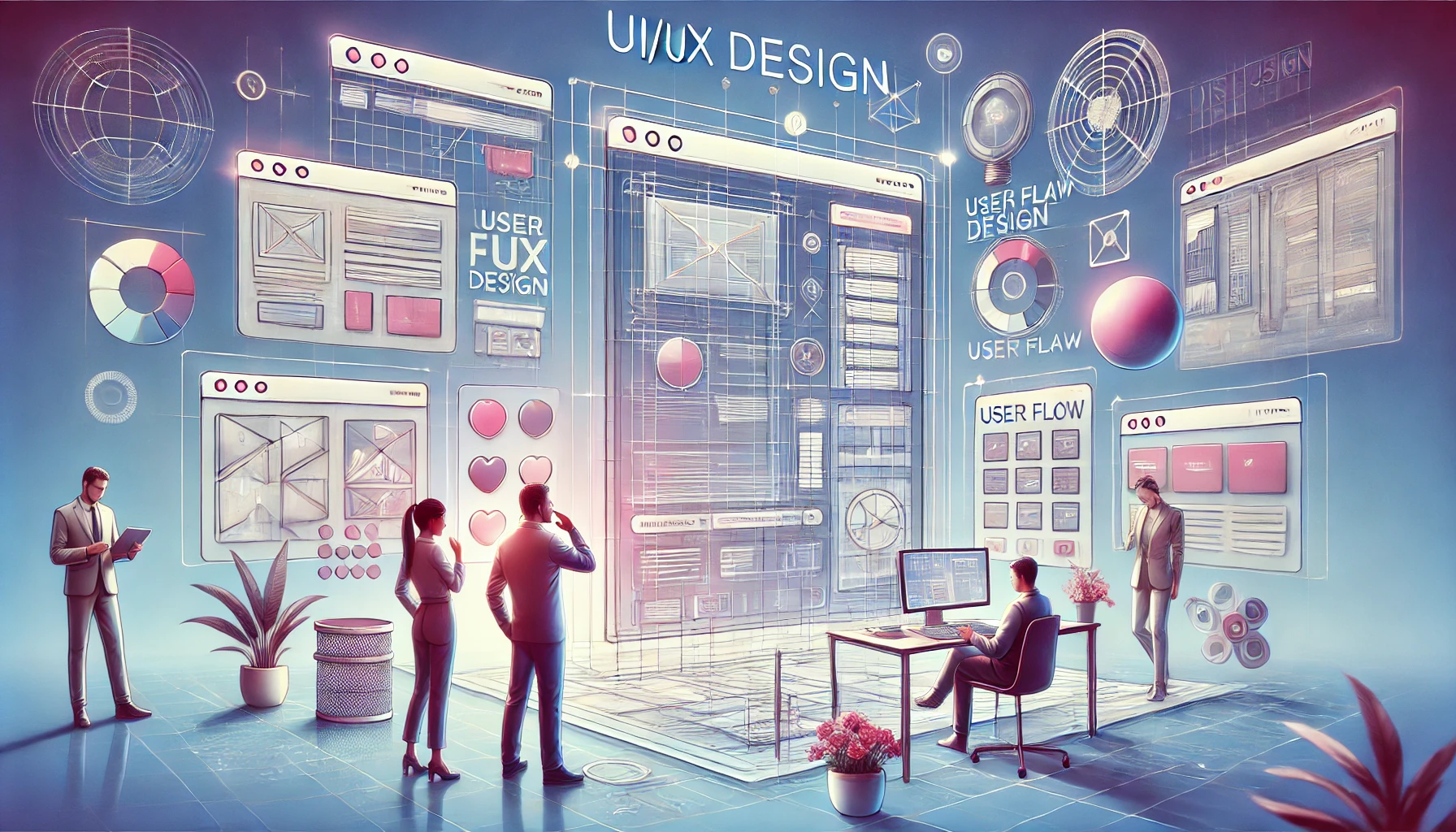
What is UI/UX Design?
Before diving into the importance of UI/UX design, let’s understand what these terms mean:
-
User Interface (UI): UI refers to the visual elements of a website, including buttons, typography, color schemes, and layout. It focuses on the aesthetic appeal and interactive elements that users engage with.
-
User Experience (UX): UX is the overall experience a user has while interacting with a website. It involves usability, functionality, navigation, and how intuitive the design feels.
Both UI and UX work together to create a seamless and enjoyable user journey.
Why is UI/UX Design Important?
1. Enhances User Engagement
A well-structured UI/UX design ensures that visitors stay longer on a website. If a website is difficult to navigate or visually unappealing, users are more likely to leave quickly, increasing the bounce rate.
2. Improves Conversion Rates
A user-friendly design encourages visitors to take action, whether it’s making a purchase, signing up for a newsletter, or filling out a contact form. A smooth UX minimizes friction in the user journey, leading to higher conversion rates.
3. Builds Brand Credibility and Trust
A professional and aesthetically pleasing website instills trust in users. A poorly designed interface can make a business appear unprofessional or unreliable.
4. Boosts SEO Performance
Google considers user experience as a ranking factor. A well-optimized UI/UX design reduces bounce rates, increases dwell time, and improves page speed—all of which contribute to better search engine rankings.
5. Enhances Mobile Responsiveness
With a significant portion of web traffic coming from mobile devices, having a responsive UI/UX design is crucial. A mobile-friendly design ensures that users have a consistent experience across different screen sizes.
6. Reduces Development Costs
Investing in UI/UX design from the beginning helps identify usability issues early, reducing the need for costly redesigns and modifications in the future.
Key Elements of an Effective UI/UX Design
-
Simplicity & Clarity – A clean and intuitive design enhances usability.
-
Fast Loading Speed – Optimized images and efficient coding improve performance.
-
Consistent Design – Uniform fonts, colors, and layouts create a cohesive brand experience.
-
Clear Call-to-Actions (CTAs) – Buttons and links should be strategically placed to guide users.
-
Interactive Elements – Animations, hover effects, and engaging visuals enhance user interaction.
-
Accessibility – Ensuring the website is usable for all, including those with disabilities.
Conclusion
UI/UX design is not just about making a website look good—it’s about creating a seamless and enjoyable experience for users. Businesses that prioritize UI/UX in their website development gain a competitive advantage by improving user engagement, trust, and conversions. Whether you’re designing a new website or revamping an existing one, investing in UI/UX design is a step toward long-term success.